When you’re just starting out to collect art there’s two big questions that you invariably ask yourself
What should I buy?
How much should I pay?
When you buy art, you’re buying more than an object. You’re buying a story, you’re buying a piece of the artist’s heart and you’re buying a moment in time. You can’t measure these things in dollars alone. Yet if you’re like me, you want to make sure you’re paying fair value. So what is fair value when it comes to art?
Get to know the artist
If you want to know how much you should be paying for art, get to know the artist. Have a look at their past exhibition catalogues and take a look at their website. It gives you a good indication of what you can expect to pay for a piece art and what it’s worth.
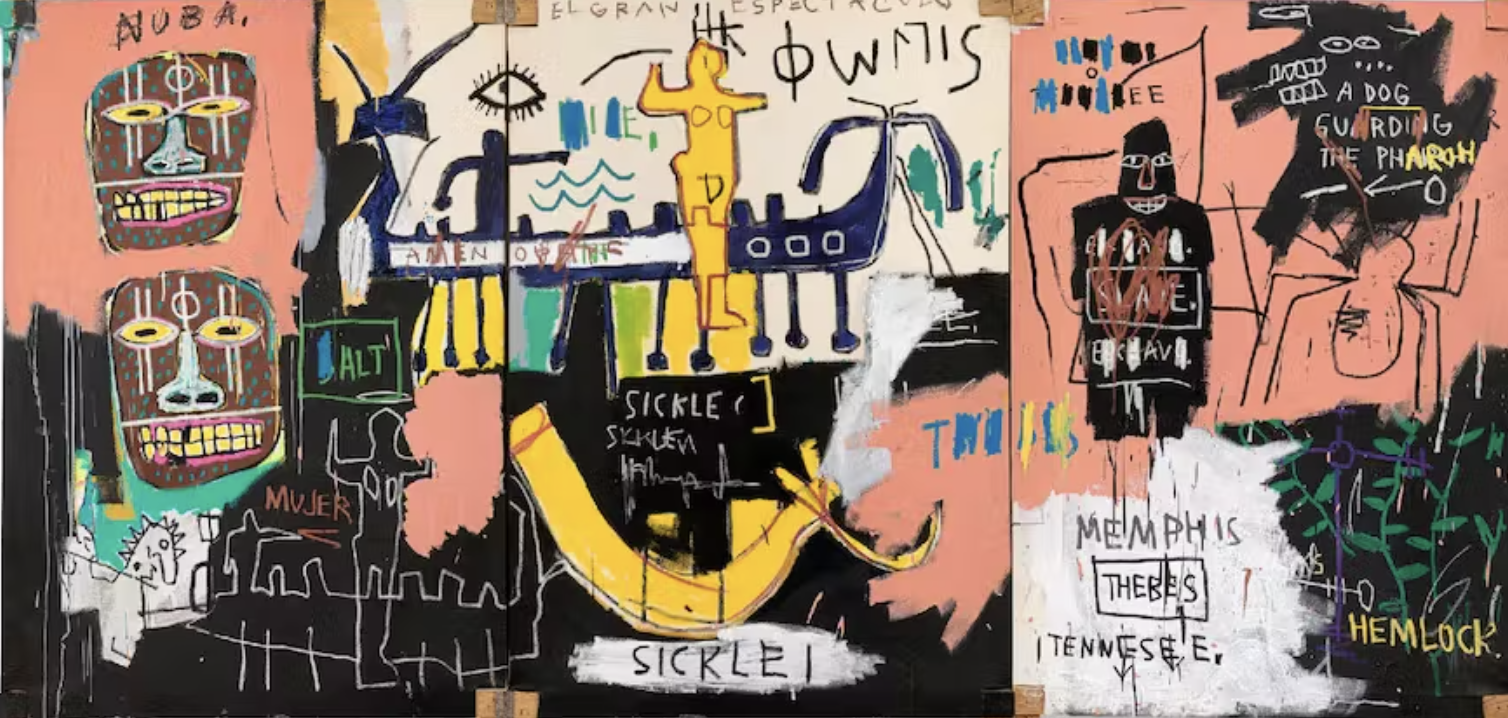
I love Basquiat, but who can afford his work? El Gran Espectaculo (The Nile) sold for $67.1 million at Christie’s 21st Century Evening Sale in New York in May 2023.
Instead discover new artists. Buying from emerging artists supports their journey and invests in the future of art. A great place to start is art school graduate shows. The National Art School’s Graduate Show is renowned for being the hot-house of emerging artists in Australia. The National Emerging Art Prize is also a great way to keep an eye on best new talent.
Size matters
The larger the work, the more you’ll pay. Works in oil or sculpture often cost more than small watercolours or sketches.
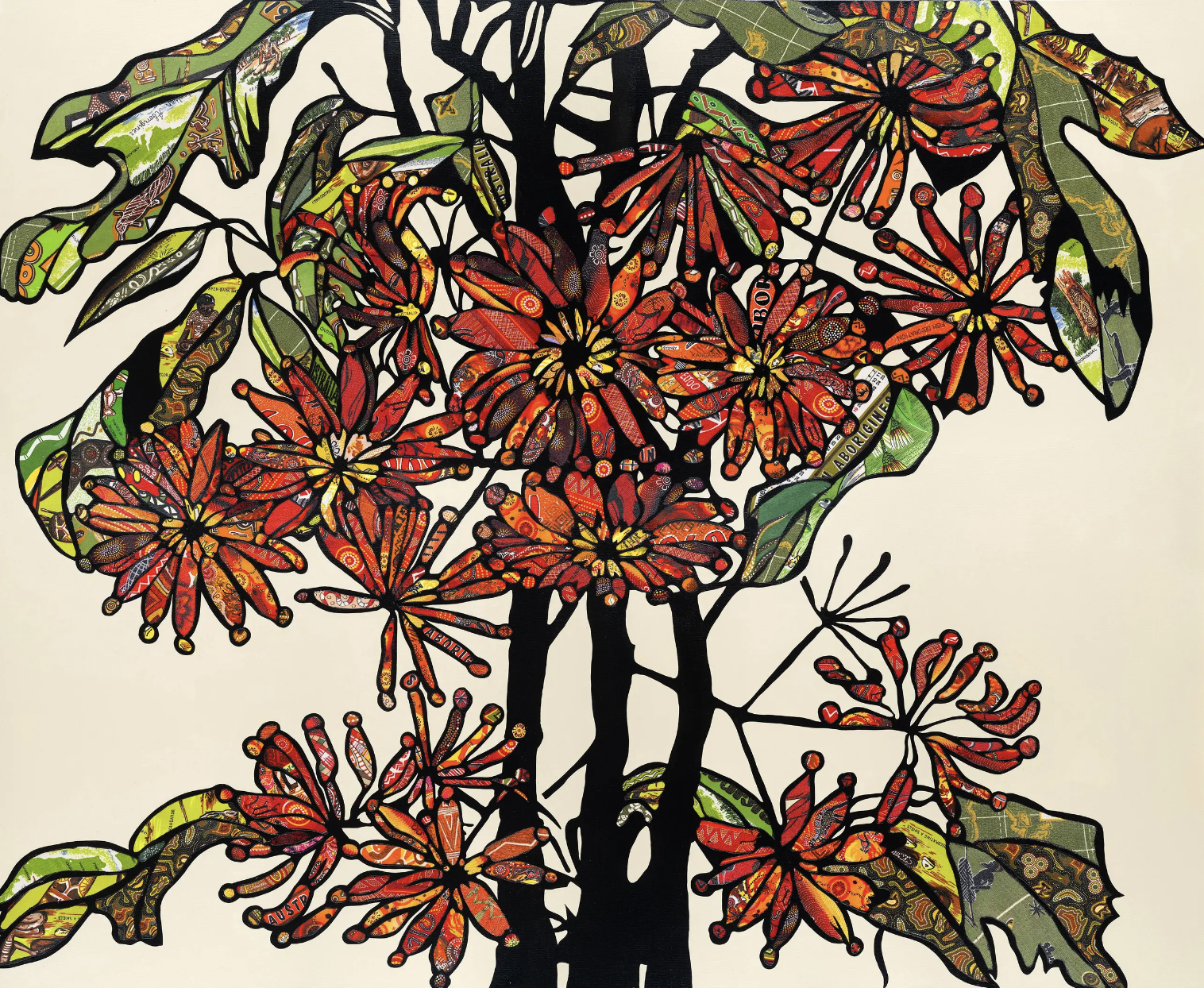
Renowned artists also often sell more affordable art as part of their ouvre. Artists like Tony Albert make their work accessible by selling smaller pieces for emerging collectors. While his larger works sell for hundreds of thousands of dollars, you can pick up smaller works, like his Forbidden Fruit collection for just over $1,000.
Don’t buy in discount sales
Good artists and good galleries never have sales. If you see an artwork on sale, it makes me question the integrity of the work.
It also makes me feel bad for collectors who have bought at an exhibition, only to see the work sold at a discount later. It undermines the value of the work and positions art as commodity like a summer cherry – in high demand and price early in the season, and low when the summer glut comes through.
Having said that, if you love a piece that you see in a gallery, the gallerist may wiggle on price a little if you buy several pieces. Remember, most galleries take a 50% commission on artwork and will move on price a little if you’re serious. Do not be afraid to ask for a better price. The galleries often welcome the discussion.
Think about your budget
When I really, really, really wanted to take home a piece of Dan Kyle’s work I got some of the best advice from Campbell Robertson-Swann. He said, “Buy the biggest piece you can afford”.
Buy what you love, but not beyond your means. There is good art at every price point. Be patient and persistent in your search.
Remember to keep an eye on the secondary art market such as Deutscher and Hackett, Leonard Joel, Menzies and Smith & Singer. These auction houses sell artwork from private collectors. Their artworks are sold at auction, so the prices are not fixed like galleries. You never know what you might pick up.
Most importantly, buy more art from living artists like me!
In the quiet of a gallery, in the bustle of an auction house, in the solitude of your home, the value of art is ultimately what it brings to your life. Pay what you can, pay what you have to, but always let your heart guide you. Art, like life, is worth what you make of it.
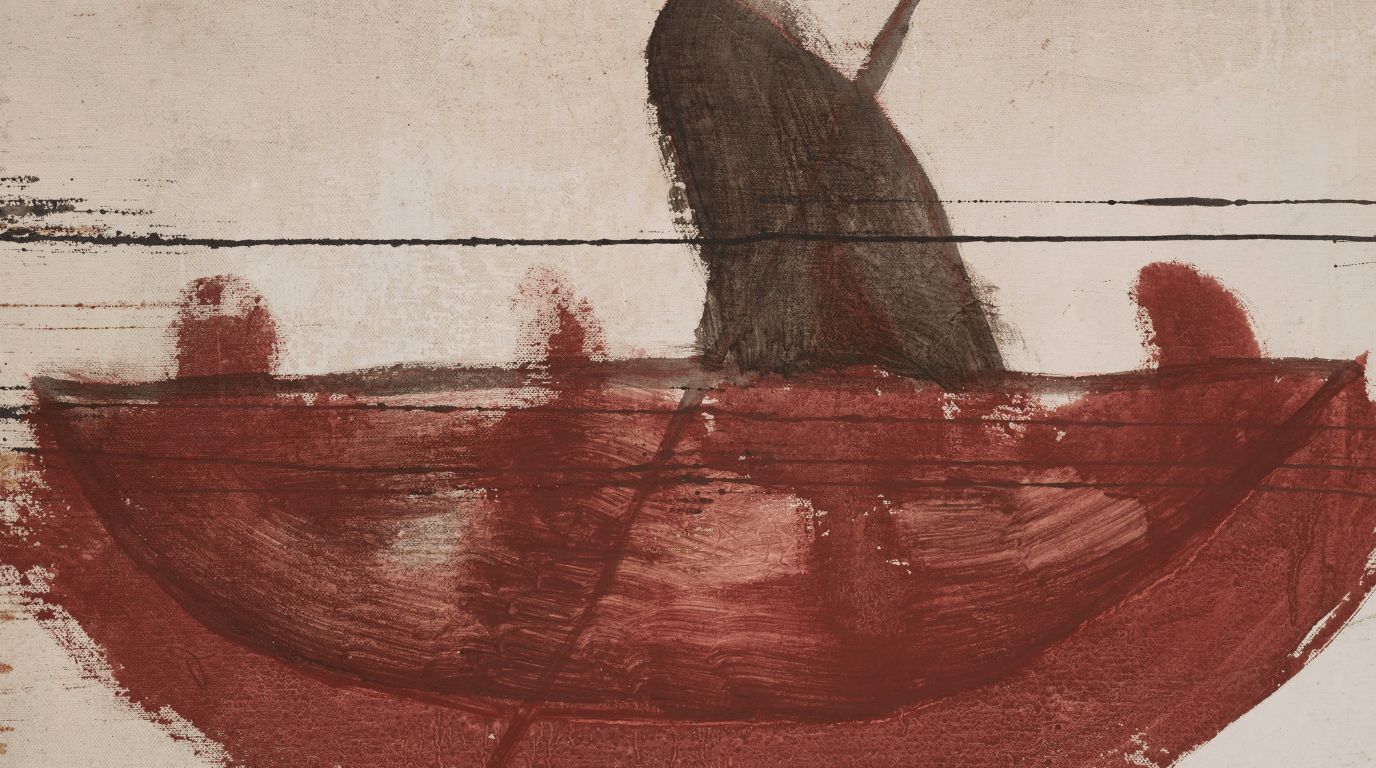
Featured image (top): detail; Lizzie Hall, Charon crossing the Acheron 1, ochre, gum arabic on found canvas, photo Stephen Best.
 Ray Monde