
The man who ate his own son
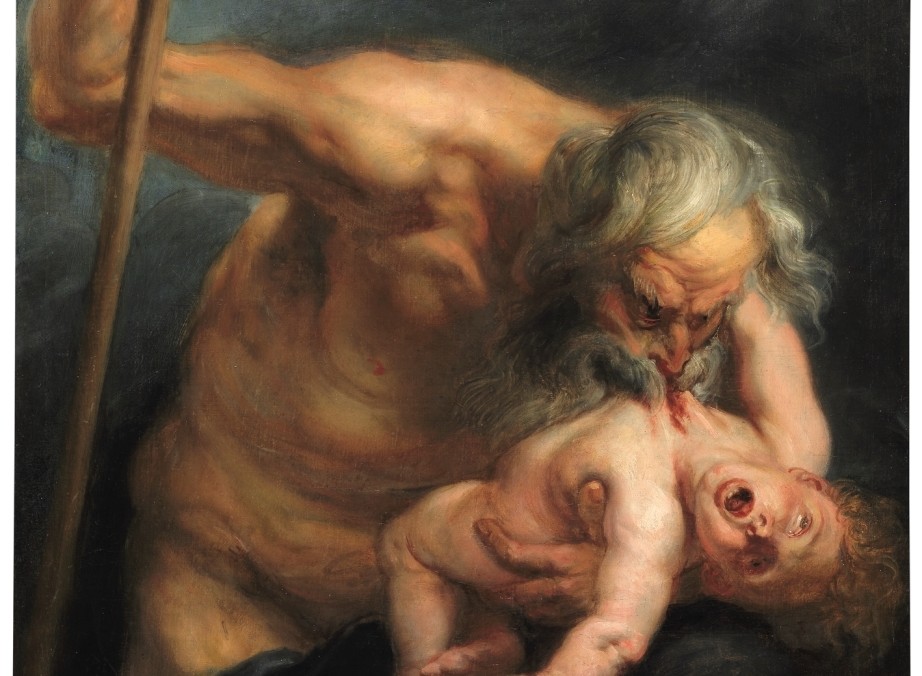
In this work by Rubens, the titan Saturn, who once ruled earth in Roman mythology, devours the infant child he holds in his arm. According to prophecy, Saturn would be overthrown by one of his sons. Fearing that his children would usurp him, he ate them all up before they could walk.
Protective of her children, the mother managed to hide just one child away from Saturn’s ravenous eyes. When that child, Jupiter, grew up, he gave his father a potion to drink. It forced him to vomit up his siblings.
Jupiter then vanquished his father and ruled over earth, fulfilling the prophecy.
As wild as this story is, carries some potent lessons. First, that we can’t escape time and old age, we will all be vanquished by time. And secondly, no matter how much we try and change our future, we are often fated to walk the path intended for us.
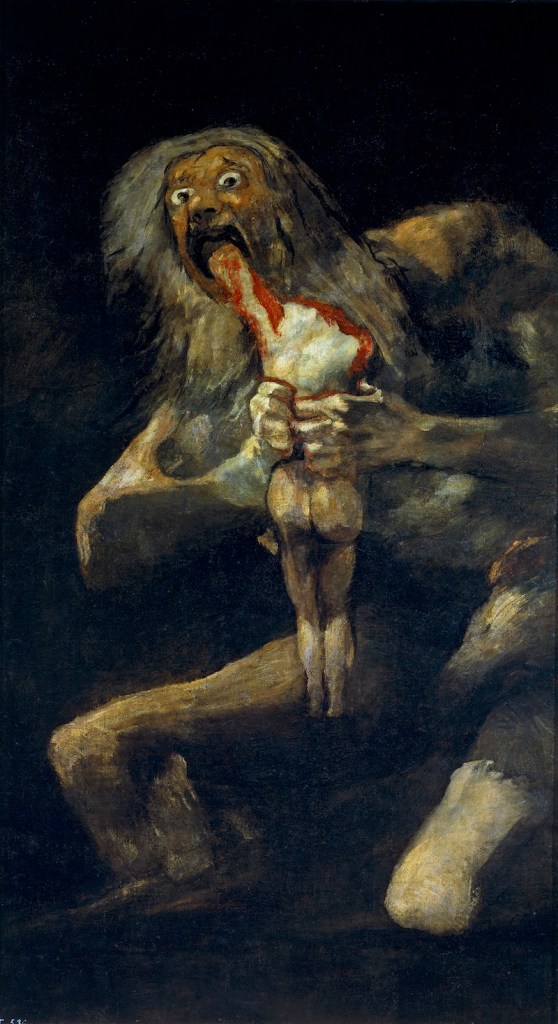
Nearly two hundred years after Rubens painted Saturn, Goya retells the story in graphic, fast-worked detail; and then two hundred years after Goya, Stephen Bird retells the story in porcelain.

Bird says about this work, “Man’s fear of destructive forces – whether predatory, natural, mental or emotional – are the things I try and give concrete form to. While these pieces appear traditional at first glance, the subjects are always subversive responses to contemporary aspects of popular culture, history, war, violence, politics and religion, within universal themes such as love, death, birth and life.”

The woman who turned into a tree
Apollo upset Eros, the god of love, by making fun of his archery skills. Eros retaliated by shooting two arrows: one hit Apollo, piercing him to the marrow of his bones, and filled him with insatiable lust for Daphne.
The other hit Daphne and filled her with abhorrence for all things sexy. Famous for being incredibly beautiful, Daphne was determined to remain unmarried and untouched by a man for the rest of her life.
You can see what’s going to happen here? Apollo relentlessly pursues Daphne and Daphne relentlessly rejects him, until in desperation, Daphne calls out to her father to save her.
What does Dad do? He turns Daphne into a laurel tree. Of course he does! What happens then? Apollo uses his powers of eternal youth and immortality to make Daphne’s laurel leaves evergreen – and wears her leaves in his hair, uses her wood to make his bow, and uses a crown made of her branches to adorn the heads of royalty and champions of games and fights.
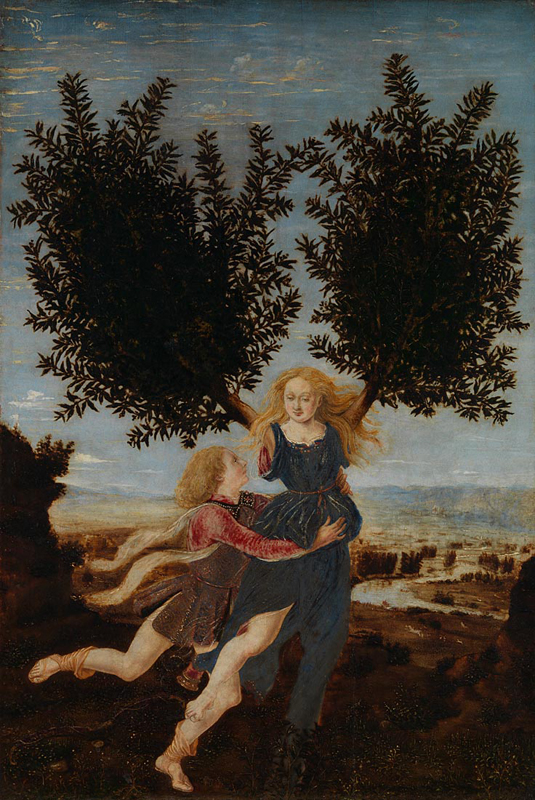
Apollo and Daphne
probably 1470-80
Oil on wood, 29.5 x 20 cm
Wynn Ellis Bequest, 1876
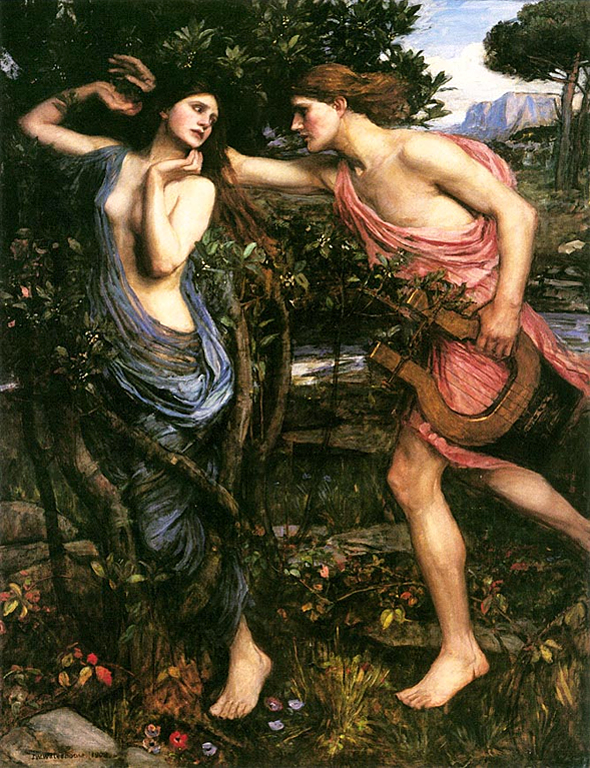
It’s a totally bizarre story, but there’s something so compelling about the woman’s hands turning into a tree. For me, it’s about the sanctity of nature and the right of a woman to choose. A very potent symbol in today’s world, particularly in a post #metoo world and the rise of the Trad Wife.
The man mauled to death by his own dogs
Sometimes we accidentally see things we’re not meant to – through no fault of our own. Most of the time, we mumble an apology and get on with our day. Sadly, not for poor Actaeon.
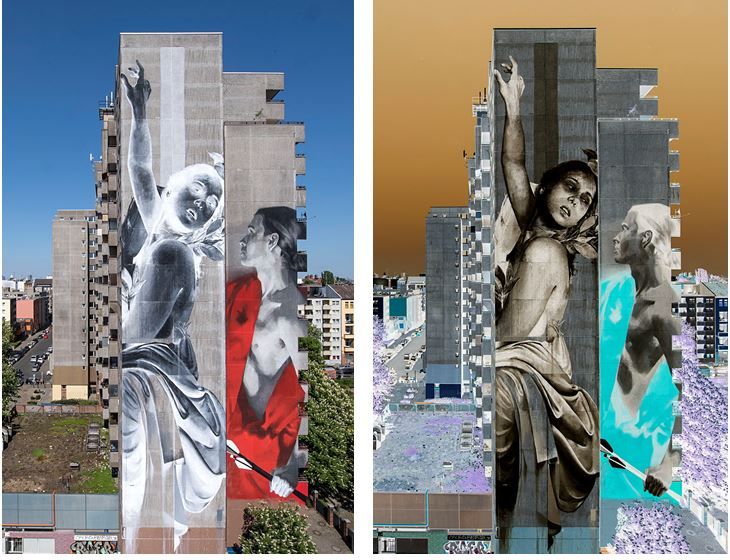
Actaeon accidentally saw Artemis while she was bathing. Artemis, we know, was the goddess of wild animals, vegetation, and childbirth.
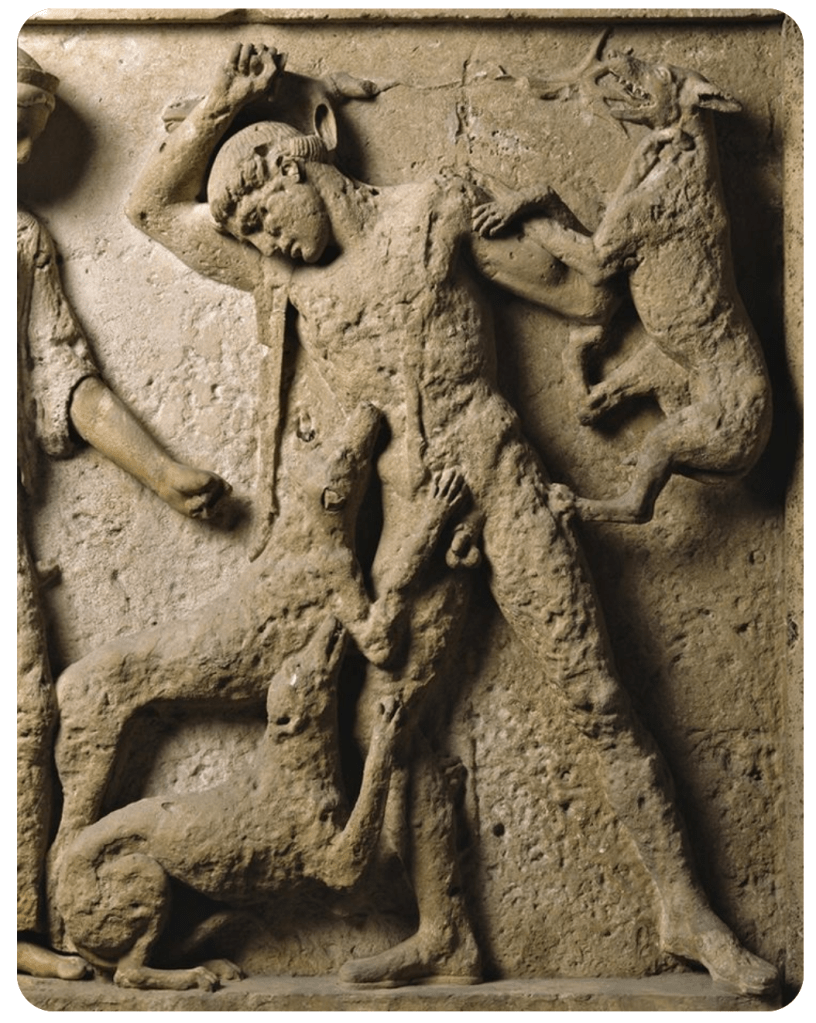
Artemis got so angry at being seen naked, she turned Actaeon into a stag who was then ripped to pieces by his own hunting dogs.
After their master’s death, the dogs searched for him in vain, howling in their grief.
In essence, it can be seen as a story of nightmares in which the hunter identifies with his victim.
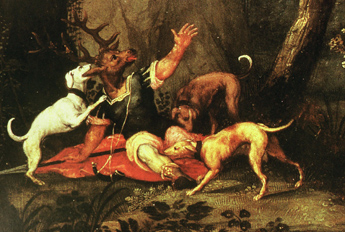
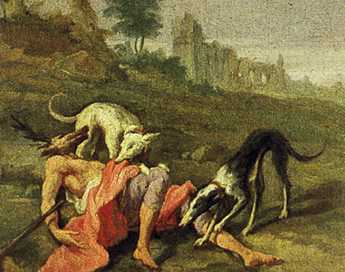
According to PMC Forbes Irving, the stag has metaphorical significance. He says, “if the hunter was the supreme example of masculinity and daring, the deer is the traditional symbol of cowardice and weakness.” The transformation places fear in the heart of the hunter.
For me, it’s a narrative of imposter syndrome – self-doubt of our own intellect, skills and accomplishments. We cannot internalise our success and experience pervasive feelings of self-doubt.
Here, the story of Actaeon is the fear that our true selves will be revealed. That we are unworthy of our success and someone will find out.
The eyes of Artemis in this sense look into our core, revealing our insecurities about ourselves and so we are in turn, torn to pieces by our own self-doubt.

What are these little fellas doing?
In many ways, there’s a mystical narrative in my works. In all my landscapes there’s always two tiny little figures. Their story, their narrative is always oblique. Are they hunters? Wayfarers? Lovers? Murderers?
What horrifies us most about grisly deeds depicted in art is that they reflect part of us, part of the human condition, that we don’t want to see in ourselves.
And that’s the best thing about art, our own stories are reflected to us and that’s what’s most important of all. What it says to us, what it reveals in us.
 Ray Monde